

Introduction
When the news broke on June 3, 2026, that veteran actor James Handy had been fatally stabbed at his Tarzana home at the age of 81, the outpouring of tributes came fast. Fans recognized his face from dozens of beloved films and TV shows even if they couldn’t always place his name. And right alongside the grief came a question millions of people quietly typed into Google: just how much was this man worth?
James Handy’s Net Worth at the time of his death is estimated to sit between $1 million and $3 million. That number might surprise people who assumed a man with 148 acting credits and appearances in billion-dollar blockbusters would have more to show for it — or it might surprise people the other way, who didn’t realize that a quiet, consistent career in supporting roles could build that kind of financial foundation at all.
Understanding James Handy’s Net Worth means understanding how Hollywood actually works for the people who aren’t Tom Cruise. It means understanding residuals, syndication deals, SAG-AFTRA scale rates, and the slow, compound effect of never stopping working. And understanding all of that makes James Handy’s Net Worth not just a number worth knowing — it’s a story worth telling.
This article covers everything: his early life, his career highlights, exactly where his money came from, and what his financial legacy tells us about the real economics of being a working actor in America.
Early Life and Path to Hollywood

James Handy was born on March 19, 1945, in New York City. He grew up with the kind of everyman quality that would later make directors trust him in roles that needed to feel real — cops, doctors, judges, supervisors, authority figures of every kind.
He didn’t burst onto the scene overnight. Like most character actors, Handy’s early career was built through theater work and small parts, slowly developing the range and reliability that would eventually make him one of the most consistently employed supporting players in the business. He made his professional screen debut in 1977 and never really stopped working after that.
His appeal was subtle but unmistakable. He had a face that audiences found instantly believable. He didn’t pull focus from the lead, but he didn’t disappear into the background either. That balance is genuinely rare, and directors noticed it early.
His foundational years — appearing in films like Taps (1981) and The Verdict (1982) — established a template he would follow for the rest of his career: take the role, do it right, and move on to the next one. That approach, repeated hundreds of times over five decades, is exactly what built James Handy’s net worth into something real.
Key Career Foundations
- Natural screen presence — directors trusted him in roles that required authority without arrogance
- Theater-trained discipline — he came to film and TV already knowing how to inhabit a character
- Consistent work ethic — he balanced film and television work simultaneously across his entire career, never allowing long gaps between jobs
- Smart role selection — he gravitated toward projects with longevity, which meant stronger long-term residual potential
Iconic Roles That Defined His Career

To understand where James Handy’s net worth came from, you have to look at the specific projects that shaped his career. Not just the famous ones — though those matter — but the full body of work, because that’s where the real financial story lives.
His Most Important Film Appearances
Handy’s film credits span nearly every major genre and era of American cinema from the 1980s through the 2020s.
K-9 (1989) and K-911 — Handy played Byers in this James Belushi action comedy and reprised the role in the sequel. Neither film was a prestige project, but both performed solidly at the box office and have remained in cable and streaming rotation for decades.
Arachnophobia (1990) — Handy played Milton Briggs in this mainstream thriller. The film developed a loyal cult following and continues to generate licensing income across streaming platforms.
The Rocketeer (1991) — A period adventure with a dedicated fanbase, another project with strong long-term streaming appeal.
Jumanji (1995) — This is one of the most financially significant credits on Handy’s résumé. He played Carl Bentley in the Robin Williams-led original, which has spawned an entire sequel franchise. The original film has been commercially active for over 30 years. When you calculate the residual payments flowing from a film that has been continuously licensed, re-released, and streamed across that timeframe, the contribution to James Handy’s net worth is meaningful — even from a single supporting role.
Unbreakable (2000) — M. Night Shyamalan’s superhero drama is now considered a modern classic. Its continued relevance in the streaming era has extended the residual lifecycle of every actor in the film.
Logan (2017) — Handy appeared as the doctor treating Hugh Jackman’s character after a fight sequence. Logan is widely regarded as one of the best superhero films ever made and has had enormous streaming success, which translates to ongoing residual income.
Top Gun: Maverick (2022) — His final major film credit and arguably the most commercially significant of his entire career. Handy played Jimmy, the bartender who works alongside Jennifer Connelly’s character. The film grossed over $1.5 billion globally and became Tom Cruise’s highest-grossing film ever. For a supporting actor, appearing in a film of that scale is a residual windfall — Top Gun: Maverick will be licensed, streamed, and re-released for decades, and every cycle generates payments. This single credit likely added more to James Handy’s net worth in his final years than many of his earlier projects combined.
His Television Career: The Engine Behind the Numbers
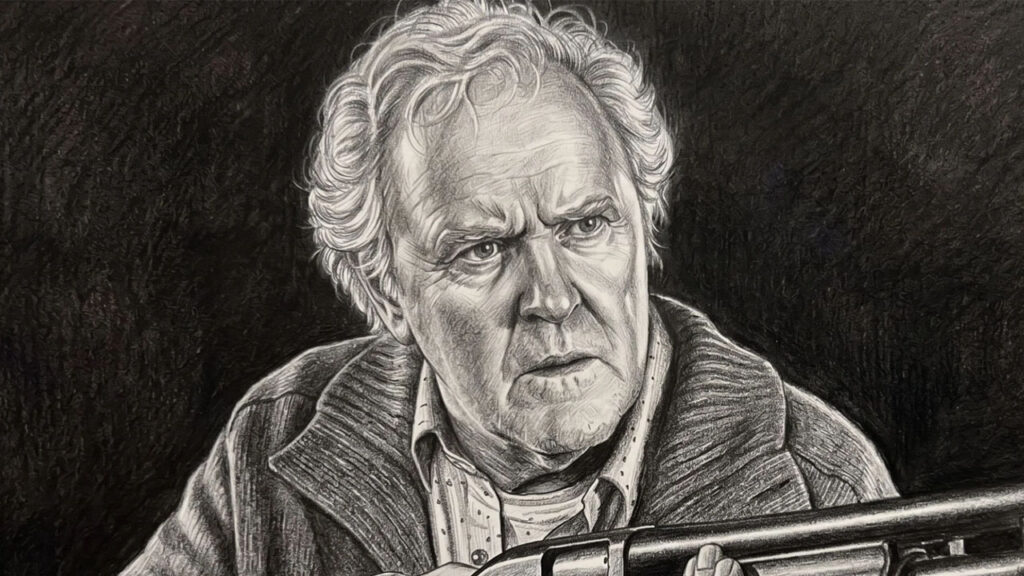
If you’re trying to understand James Handy’s net worth, television is where you find the most consistent financial foundation. His TV résumé is extraordinary by any measure.
He played Captain Haverhill across 10 episodes of NYPD Blue — one of the most critically acclaimed dramas in American television history, a show that has been in perpetual syndication for decades. He appeared as Arthur Devlin in Alias and Lou Handleman in Profiler, both recurring roles with multi-episode commitments that generated meaningful upfront paychecks.
Beyond that, he logged guest or recurring appearances on:
- The X-Files
- The West Wing
- Seinfeld
- Criminal Minds
- Castle
- NCIS
- CSI: NY
- Law & Order
- Murder, She Wrote
Every one of those shows exists in permanent syndication or streaming. Every time a streaming platform licenses Seinfeld or a network airs a Law & Order rerun, the actors who appeared in those episodes receive a residual payment. For someone with Handy’s volume of appearances across that many long-running shows, the annual residual income — while modest per payment — aggregates into a genuinely significant ongoing revenue stream over decades.
James Handy’s Net Worth: The Full Breakdown
Let’s talk specifics. How does a character actor’s net worth actually get calculated, and why does the $1 million to $3 million range make sense for James Handy?
No official financial statement was ever published. Handy was intensely private about money, as most working actors are. The estimates circulating after his death are based on industry knowledge of SAG-AFTRA compensation structures, typical residual income patterns for actors with his credit volume, and general knowledge of what sustained employment in Hollywood over five decades produces.
Here is a structured breakdown of James Handy’s net worth by income source:
| Income Source | Estimated Contribution | Details |
| Film & TV Salaries | Primary income | 148–150 credits over ~49 years of work |
| TV Residuals & Royalties | Major ongoing income | Syndication income from Jumanji, NYPD Blue, Seinfeld, The West Wing, and dozens more |
| Streaming Royalties | Growing in later years | Netflix, Paramount+, Disney+, and others licensing older titles |
| Real Estate | Asset stability | Home in Tarzana, Los Angeles |
| Fan Events & Conventions | Supplemental | Character actors increasingly appear at fan conventions |
| Total Estimated Net Worth | $1 Million – $3 Million | Best industry estimate as of June 2026 |
Why the Range Is So Wide — And Which End Is More Likely
You’ll notice that some outlets reported James Handy’s net worth as low as $500,000 and others as high as $5 million. That wide range exists because nobody outside his financial advisors and estate actually knows the number.
The $500,000 figure is almost certainly too low. An actor with 150 credits who worked continuously for 49 years, appearing in multiple billion-dollar films and flagship television dramas, would have generated far more than that even at minimum SAG scale.
The $5 million figure is probably too high. Character actors at Handy’s level simply don’t command the per-project fees that would push accumulated wealth that high unless they made unusually shrewd investments.
The $1 million to $3 million range is the most defensible estimate. It reflects the reality of sustained employment at supporting-actor scale, amplified by decades of compound residual income. It’s a genuinely comfortable financial position — well above what most American workers ever accumulate — without being the kind of Hollywood wealth that makes headlines.
What SAG-AFTRA Scale Rates Actually Mean
Here’s something most people don’t realize: a one-day film appearance at SAG-AFTRA minimum rates pays a few hundred to a few thousand dollars depending on the budget tier. A featured supporting role with multiple shooting days might pay tens of thousands per project.
Multiply that across 150 credits, add decades of residuals from projects that never stop airing, factor in a home in one of America’s most valuable real estate markets, and James Handy’s net worth in the $1–$3 million range is not just plausible — it’s exactly what you’d expect.
The Roles That Contributed Most to James Handy’s Net Worth
Not all 150 credits contributed equally. A few specific projects stand out as likely having the highest long-term financial impact.
Top Gun: Maverick — The Late-Career Financial Peak
Appearing in the highest-grossing film of 2022 at age 76 is remarkable by any standard. Top Gun: Maverick earned over $1.5 billion globally, spent multiple weeks at number one worldwide, and quickly became one of the most-streamed films on Paramount+. For an actor in a visible supporting role, residual payments from a film of that scale flow consistently and will continue to do so for many years. This single credit likely generated more ongoing income in Handy’s final years than any other project.
Jumanji — Three Decades of Residuals
Jumanji (1995) has never left the cultural conversation. The Robin Williams original led to Jumanji: Welcome to the Jungle (2017) and Jumanji: The Next Level (2019), both of which renewed mainstream interest in the original film. Every reboot cycle drives new viewers to the source material. For Handy, who played Carl Bentley in the original, that means residual payments linked to a franchise that has now been commercially active for 31 years.
NYPD Blue — Television’s Most Reliable Residual Engine
Ten episodes of a flagship network drama that has been in syndication for decades is a serious financial asset. NYPD Blue ran for 12 seasons and won 20 Emmy Awards. It remains one of the most syndicated dramas in American television history. A recurring role like Handy’s generates residuals across every domestic syndication deal, every international licensing agreement, and every streaming platform that carries the show.
James Handy’s Life Away From the Screen
Despite his enormous body of work, Handy was almost entirely absent from Hollywood’s social scene. He didn’t chase celebrity. He didn’t do red carpets unless he had to. He lived quietly in Tarzana — a residential neighborhood in the San Fernando Valley — in a way that reflected who he was as a professional: serious, grounded, and focused on the work itself.
This lifestyle choice also had financial implications. Working actors who avoid the extravagant spending patterns common among Hollywood celebrities tend to accumulate and preserve wealth more effectively. Handy’s decision to live modestly in Tarzana rather than in a Malibu estate or Beverly Hills mansion was consistent with the kind of financial discipline that makes a $1–$3 million net worth achievable for someone at his income level.
At the time of his death, he was in a long-term relationship, and his girlfriend’s adult son, Michael Gledhill, became the suspect in his murder. Gledhill, 44, was arrested by the LAPD and charged with murder (California Penal Code 187(a)). He was booked at Van Nuys Jail and held on $2 million bail. The investigation is being handled by the LAPD’s Robbery and Homicide Division.
The tributes that followed his death were telling. Colleagues described him not in terms of his roles but in terms of his character — professional, reliable, skilled, and genuinely kind. That’s the reputation of someone who treated their career as a craft, not a performance.
What James Handy’s Net Worth Tells Us About Hollywood Economics
James Handy’s net worth is a window into how Hollywood really works for the people who aren’t superstars.
The entertainment industry loves a leading man narrative. But for every Tom Cruise collecting $100 million per film, there are hundreds of working actors doing the quiet, consistent labor that makes those films worth watching. Character actors fill the world of every story. They are the cops who challenge the hero, the doctors who deliver bad news, the bartenders who listen, the judges who decide.
Most of those actors struggle. They go through dry spells, take anything they can get, and often leave the industry altogether. The ones who stay — and stay employed — are exceptional. James Handy was in that category for nearly five decades.
The economic model for a working character actor like Handy is built on three pillars:
- Volume — More credits means more upfront paychecks and more residual streams
- Longevity — The compound effect of 49 years in the industry, with residuals building on residuals
- Project selection — Appearing in projects with long commercial lives (hit TV shows, franchise films) maximizes the residual returns per credit
James Handy’s net worth is the product of executing all three pillars consistently, across five decades, without a single franchise-leading role to his name. That is a genuinely impressive financial achievement.
The Enduring Legacy of a Reliable Talent
What James Handy left behind is bigger than any dollar figure. He left behind a body of work that will keep reaching new audiences for decades. His scenes in Jumanji are being discovered right now by kids who weren’t born when the film came out. His appearance in Top Gun: Maverick introduced him to an entirely new generation. His NYPD Blue episodes still air on cable.
In an industry that prizes spectacle and celebrity, Handy proved something important: you can build a career — and a life — on the foundation of showing up, doing it well, and never cutting corners. That’s a legacy no net worth figure can fully capture.
His death was a tragedy that robbed the industry of one of its most reliable and respected talents. But the work he left behind will outlast the circumstances of how he died.
Conclusion
James Handy’s Net Worth of an estimated $1 million to $3 million at the time of his death is a number that deserves context. It reflects 49 years of consistent work, 148 to 150 acting credits, appearances in billion-dollar films, recurring roles in flagship television dramas, and decades of compounding residual income from projects that never stopped reaching audiences.
James Handy’s Net Worth was never going to make the Forbes list. But it represents something arguably more valuable: financial stability earned through genuine craft, professional integrity, and the kind of work ethic that kept him employed from 1977 to 2026. He was 81 years old and still working. That fact alone says everything.
For anyone who wants to understand what a real Hollywood career looks like — not the fantasy, but the reality — James Handy’s Net Worth and the story behind it is exactly the place to start.
FAQs
Q1. How much is James Comey worth 2026?
James Comey’s estimated net worth is approximately $15 million to $16 million. This wealth has been accumulated through his high-profile career as the former FBI Director, lucrative roles as general counsel at firms like Bridgewater Associates and Lockheed Martin, and earnings from bestselling books such as A Higher Loyalty.
Q2. What was James Cagney’s net worth when he died?
James Cagney had a net worth between $500,000 and $1 million at the time of his death in 1986. Although he was one of Hollywood’s highest-paid actors during the Golden Age, subsequent legal battles by his estate trustees revealed the actual value of his holdings was significantly lower than earlier public estimates.
Q3: What was James Handy’s most financially significant role? His appearance as Jimmy the bartender in Top Gun: Maverick (2022) was likely his most financially significant late-career credit. The film grossed over $1.5 billion globally, and ongoing streaming residuals from a film of that scale generate income for years. His role in Jumanji (1995) also contributed meaningfully to James Handy’s Net Worth through three decades of residuals.
Q4: How did James Handy die? James Handy was fatally stabbed at his home in Tarzana, Los Angeles on June 3, 2026, at age 81. Michael Gledhill, the 44-year-old son of Handy’s girlfriend, was arrested and charged with murder. He was held on $2 million bail at Van Nuys Jail.
Q5: Was James Handy a millionaire? Yes. Based on industry estimates, James Handy’s Net Worth exceeded $1 million at the time of his death. While not wealthy by Hollywood leading-man standards, he achieved genuine financial security through consistent employment and decades of compounding residual income.
Q6: How long was James Handy’s acting career? James Handy’s career spanned approximately 49 years, from his screen debut in 1977 through his final years of work before his death in June 2026. He accumulated between 148 and 150 acting credits during that period.
Q7: What are TV residuals and how much did they contribute to James Handy’s net worth? TV residuals are payments made to actors each time their work airs, is syndicated, or is licensed to a streaming platform. For an actor with Handy’s volume of credits on long-running shows like Seinfeld, The West Wing, NYPD Blue, and The X-Files, annual residual income could realistically have reached tens of thousands of dollars per year — a meaningful contribution to James Handy’s Net Worth over decades.
Q8: Did James Handy appear in Top Gun: Maverick? Yes. James Handy played Jimmy the bartender in Top Gun: Maverick (2022), one of the highest-grossing films of all time. It was one of the most commercially significant credits of his career and a notable driver of his later-life earnings.
Q9: Who was Michael Gledhill? Michael Gledhill was the 44-year-old son of James Handy’s girlfriend. Handy had reportedly acted as a father figure to him. Gledhill was arrested by LAPD after Handy’s death on suspicion of murder and is being held on $2 million bail pending investigation.
Q10: How does a character actor’s net worth compare to a leading actor’s? Leading actors in major productions can earn tens of millions per film. Character actors like James Handy typically earn SAG-AFTRA scale rates — from hundreds to tens of thousands per project — with total wealth built through volume and residuals rather than individual large paydays. James Handy’s Net Worth of $1–$3 million is a strong outcome for a career at that level.
Disclaimer: All net worth and income figures cited in this article are estimates based on publicly available information, industry benchmarks, and third-party analytics. No official financial statements for Haiden Deegan are publicly available. Richlix.com does not claim these figures as confirmed fact.
Read More About ;
Scott Pelley Net Worth 2026: How Much Did the CBS Legend Really Earn?
Peabo Bryson Net Worth at Death: The Truth Behind the Numbers $2.5M
Roger Federer Net Worth 2026: The Billionaire Story Behind His $1.1B Fortune