


Here is a number that should stop you in your tracks: $109.4 billion.
That is michael bloomberg net worth as of 2026, according to Forbes’ real-time billionaire tracker. But what makes this figure genuinely remarkable isn’t the size of it — it’s the story behind it. Michael Bloomberg wasn’t born rich.
He wasn’t handed a family business or a trust fund. He was a middle-class kid from Boston who worked his way up Wall Street, got fired at age 39, and used his severance check to solve a problem nobody else had bothered to fix.
The michael bloomberg net worth story is one of the most compelling wealth-building journeys in American business history, and it all started with a pink slip.
Whether you’re curious about the number, the business behind it, or the man himself, this complete michael bloomberg net worth breakdown covers everything — from his early life to his $109 billion empire in 2026.
Michael Bloomberg: Quick Biography Overview
Before we get into the money, here’s who we’re talking about.
| Category | Details |
| Full Name | Michael Rubens Bloomberg |
| Date of Birth | February 14, 1942 |
| Age (2026) | 84 years old |
| Birthplace | Brighton neighborhood, Boston, Massachusetts |
| Nationality | American |
| Education | B.S. Electrical Engineering — Johns Hopkins University; MBA — Harvard Business School |
| Profession | Entrepreneur, Businessman, Politician, Philanthropist |
| Known For | Founder of Bloomberg L.P., former NYC Mayor |
| First Major Job | Salomon Brothers (1966–1981) |
| Company Founded | Innovative Market Systems / Bloomberg L.P. (1981) |
| Bloomberg L.P. Ownership | Approx. 88% |
| Political Career | 109th Mayor of New York City (2002–2013) |
| Mayoral Salary Accepted | $1 per year |
| Partner | Diana Taylor (2000–present) |
| Children | 2 daughters (Emma and Georgina) |
| Primary Residence | New York City |
| Philanthropy | Joined the Giving Pledge (2010) |
| Lifetime Donations (as of 2025) | Over $21 billion |
| Estimated Net Worth (2026) | ~$109.4 billion |
Michael Bloomberg Net Worth Over the Last 10 Years
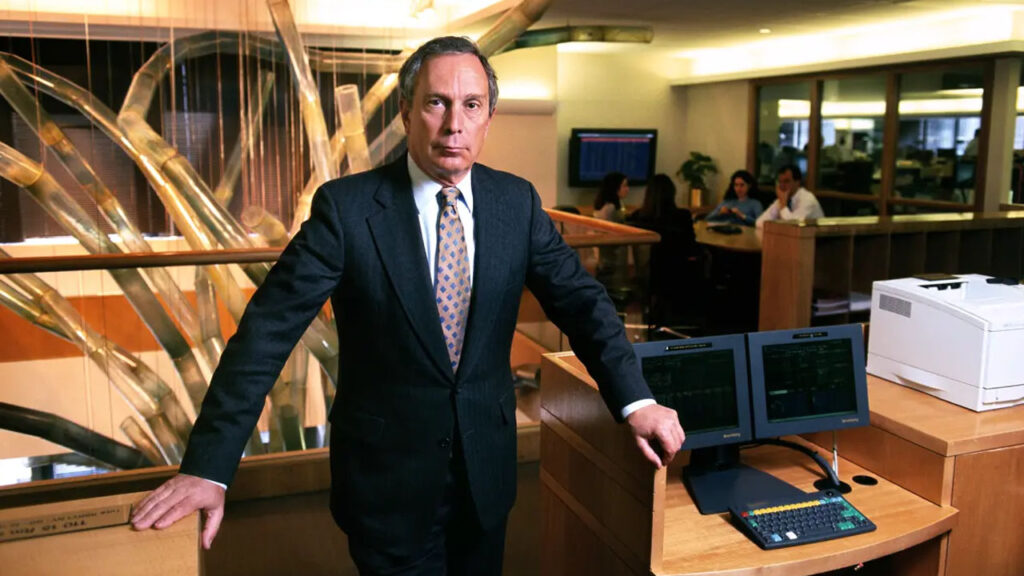
The growth trajectory of michael bloomberg net worth over the past decade reflects the compounding power of owning a dominant, private company in a high-demand, defensible market.
| Year | Estimated Net Worth | Change |
| 2016 | ~$40 billion | — |
| 2017 | ~$47.5 billion | +$7.5B |
| 2018 | ~$51 billion | +$3.5B |
| 2019 | ~$55 billion | +$4B |
| 2020 | ~$59 billion | +$4B |
| 2021 | ~$70 billion | +$11B |
| 2022 | ~$82 billion | +$12B |
| 2023 | ~$96 billion | +$14B |
| 2024 | ~$105 billion | +$9B |
| 2025 | ~$105–106 billion | Stable |
| 2026 | ~$109.4 billion | +$4B |
Sources: Forbes Real-Time Billionaires, Celebrity Net Worth, WageIndicator, LeaderPortfolio
What’s remarkable about this table isn’t just the total — it’s how consistently the number grows. Bloomberg L.P. operates in a market segment (professional financial data subscriptions) where clients are deeply locked in. Financial firms build their entire workflows around Bloomberg Terminals. Switching costs are enormous. That creates a level of revenue predictability that few businesses of any size can match, and it’s why michael bloomberg net worth keeps compounding even as he gives billions away.
Michael Bloomberg: Starting from Scratch
A Middle-Class Start in Boston
Michael Bloomberg’s early life gives absolutely no hint of what was coming. He grew up in a modest household in Medford, Massachusetts — a suburb just outside Boston. His father, William Bloomberg, worked as a bookkeeper for a dairy company. His mother, Charlotte, raised their family on what was decidedly a working-class income. There were no stock tips over dinner, no country club memberships, no family wealth to lean on.
What Bloomberg had instead was drive. He was active in the Boy Scouts and eventually reached Eagle Scout — a milestone that requires consistent work, leadership, and follow-through. Those qualities showed up early and never went away.
He earned a scholarship to attend Johns Hopkins University, where he studied electrical engineering. Then he went straight to Harvard Business School and earned his MBA. Those two degrees — one technical, one financial — turned out to be exactly the right combination for what he would eventually build.
In 1966, Bloomberg landed a position at Salomon Brothers, one of Wall Street’s most prestigious investment banks at the time. He started at the very bottom, quite literally counting stock certificates in the back office. No glamour, no corner office — just paperwork and persistence. Over the next 15 years, he worked his way up through the firm with enough dedication and skill to eventually become a general partner.
By 1981, he was 39 years old, had a seat at one of Wall Street’s most elite firms, and was making serious money. Then, in a move that reshaped American financial media, Salomon Brothers was acquired by Phibro Corporation — and Bloomberg was shown the door. His entire career at the firm was over, just like that. As a parting gift, Salomon Brothers handed him a $10 million severance package and wished him luck.
Most people would have taken that check, found a new Wall Street job, and gone back to counting their blessings. Bloomberg saw it differently. He saw an opportunity.
The Big Idea That Changed Everything
How Bloomberg Terminal Was Born
Getting fired at 39 with $10 million in your pocket is either a disaster or a launchpad. For Michael Bloomberg, it was the latter — but only because he was paying attention during his 15 years on Wall Street.
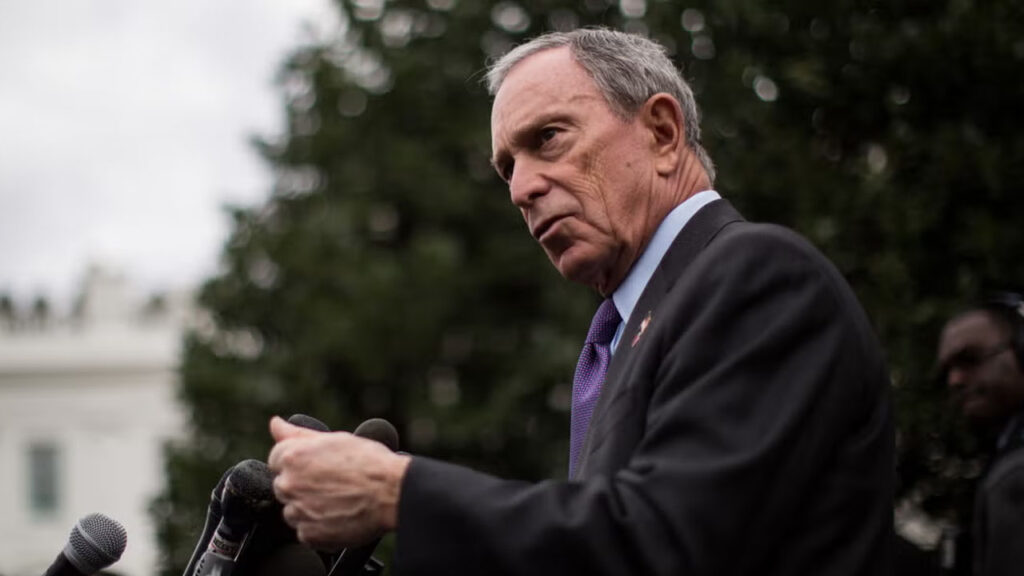
Here’s the problem he had identified: getting accurate, real-time financial information in the early 1980s was genuinely painful. Traders and analysts scrambled across multiple disconnected data sources — price sheets, phone calls, paper printouts — to piece together a coherent picture of what markets were doing. By the time you assembled all the information, some of it was already stale. In a world where seconds could mean millions, that inefficiency cost real money every single day.
Bloomberg’s insight was clean and powerful: what if one system delivered everything — stock prices, bond yields, historical data, analytics tools, and breaking financial news — all in real time, on one terminal, customized for financial professionals?
In 1981, he founded a company called Innovative Market Systems (later renamed Bloomberg L.P.) and built exactly that. The Bloomberg Terminal was an expensive product — leases ran around $20,000 per year — but for anyone whose job depended on having the fastest, most accurate financial data available, that price was not just reasonable, it was cheap compared to the alternative.
The breakthrough came early and hard. Merrill Lynch, one of the biggest financial firms in the world, ordered 22 terminals almost immediately and made a $30 million investment in Bloomberg’s company. Other Wall Street institutions quickly followed. Within a few years, the Bloomberg Terminal wasn’t just popular — it was essential. Pulling a terminal out of a trading floor would have been like pulling the oxygen out of the room.
That single product insight — born out of frustration on a Wall Street trading floor — became the foundation of michael bloomberg net worth as we know it today.
Michael Bloomberg: Building a Fortune
How Bloomberg L.P. Became a $60–70 Billion Empire
The Bloomberg Terminal is the engine that built everything. Today, Bloomberg L.P. generates approximately $10 billion in annual revenue, with hundreds of thousands of terminals installed at financial institutions, central banks, hedge funds, and investment firms across the globe. Each terminal currently costs roughly $24,000–$27,000 per year to lease — and demand has never slowed down.
The most striking fact about Bloomberg’s wealth is this: he still owns approximately 88% of Bloomberg L.P. That’s an almost unheard-of ownership stake for a company of this scale and age. He never took it public. He never diluted his ownership through venture capital rounds or IPO proceeds. He simply built the company, kept control, and watched its value compound over decades.
If Bloomberg L.P. were listed on a public stock exchange, financial analysts estimate the company would carry a valuation of between $60 billion and $70 billion. Bloomberg’s 88% stake in that enterprise is the overwhelming source of michael bloomberg net worth — not real estate, not stock investments, not celebrity endorsements. One company, privately held, relentlessly valuable.
How the Company Expanded Beyond the Terminal
Bloomberg’s financial data platform grew well beyond its original terminal product. Today, Bloomberg L.P. operates across four main pillars:
1. Bloomberg Terminal & Data Services — The core product. Real-time market data, analytical tools, trading systems, and portfolio management software used by financial professionals worldwide.
2. Bloomberg News & Media — A global news organization with over 2,700 journalists and analysts in 120 countries. Bloomberg News, Bloomberg TV, Bloomberg Radio, Bloomberg Businessweek, and Bloomberg Markets are all part of this arm.
3. Bloomberg Law & Government — Subscription-based legal research and government intelligence tools serving law firms, compliance departments, and regulatory bodies.
4. Bloomberg ESG Data — The newest and fastest-growing segment. Bloomberg has pivoted aggressively into Environmental, Social, and Governance (ESG) analytics, now providing company-reported ESG data on over 16,000 companies from more than 100 countries, representing 94% of the global market cap. In just the first half of 2025, Bloomberg’s media and data revenue jumped 7%, fueled significantly by this ESG expansion. This is a massive growth driver that most net worth articles completely overlook.
Bloomberg’s Real Estate Portfolio
Beyond Bloomberg L.P., Michael Bloomberg has invested heavily in real estate across multiple countries. He owns significant properties in:
- New York City — His primary residence and multiple high-value Manhattan properties
- Bermuda — A long-standing retreat property
- London, England — A substantial estate in one of the world’s most expensive property markets
- Vail, Colorado — Mountain property with significant appreciated value
- Florida — Warm-weather holdings in a state with no personal income tax
- The Hamptons, New York — Prime beachfront real estate with consistent appreciation
While exact valuations are not publicly disclosed, Bloomberg’s real estate portfolio is collectively valued at hundreds of millions of dollars — though it represents a relatively small fraction of his total net worth compared to his Bloomberg L.P. stake.
His wealth has grown at a pace that defies most expectations. In 2000, his estimated net worth was approximately $4 billion. By 2008 it had doubled to $8 billion. By 2017 it crossed $47.5 billion. By 2023 it approached $96 billion. As of 2026, Forbes estimates michael bloomberg net worth at $109.4 billion, placing him among the top 20 wealthiest individuals on the planet.
Michael Bloomberg: The Mayor Who Worked for a Dollar
Twelve Years Running New York City — Nearly for Free
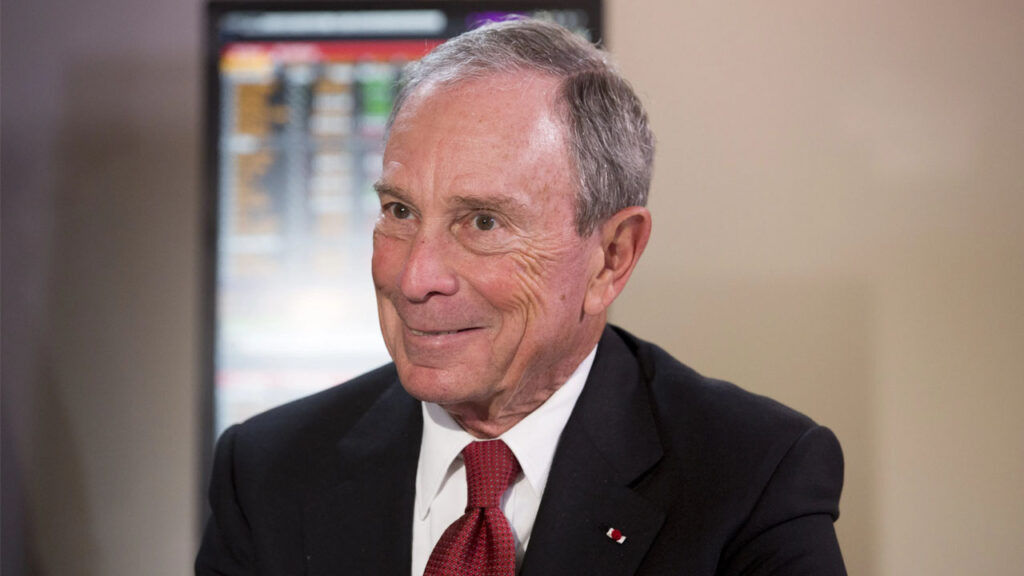
In late 2001, just weeks after the September 11 attacks reshaped New York City forever, Michael Bloomberg made what many considered a shocking career pivot: he ran for Mayor of New York City. He won — and then did something almost no one in American politics had ever done at that level. He declined his $195,000 annual mayoral salary and accepted just $1 per year in compensation.
To be clear, Bloomberg wasn’t making a symbolic gesture. He genuinely didn’t need the money. He paid for his own transportation, his own security expenses — reportedly more than $6 million over his three terms — and spent his own funds on staff meals during his tenure in City Hall.
Over 12 years and three terms as the 109th Mayor of New York City, Bloomberg left a complicated but undeniably substantial mark on the city. His administration implemented one of America’s most visible public health policies: a sweeping ban on smoking in restaurants, bars, and public spaces that became a national model. He pushed hard on environmental policy, education reform, and economic development — helping New York recover from both the 9/11 aftermath and the 2008 financial crisis.
His tenure had critics, particularly around the stop-and-frisk policing program and the attempted ban on large sugary drinks. But few questioned his commitment or his work ethic. He showed up every day to one of the most demanding executive jobs in America and took home a dollar.
In 2020, Bloomberg re-entered politics and launched a campaign for the Democratic presidential nomination. He self-funded the entire effort, spending a staggering $935 million of his own money — the most expensive primary campaign by an individual candidate in American history. He won 61 delegates before withdrawing and endorsing Joe Biden. Critics called it an extraordinary waste of capital. Bloomberg characterized it as investing in issues he cared about deeply: climate policy, gun control legislation, and public health reform.
Michael Bloomberg: Giving It All Away
America’s Most Generous Philanthropist
Here’s a number that puts michael bloomberg net worth in a completely different context: he has given away more than $21 billion in his lifetime as of May 2025. In 2024 alone, he donated $3.7 billion to various causes, making him the single largest individual donor in the United States that year.
Bloomberg joined the Giving Pledge in 2010 — the commitment championed by Warren Buffett and Bill Gates asking the world’s wealthiest individuals to dedicate the majority of their wealth to philanthropy. Bloomberg didn’t just sign the pledge. He made it the operating system of his public life.
His charitable giving through Bloomberg Philanthropies focuses on five core areas:
1. Environment — Bloomberg donated $50 million to the Sierra Club’s Beyond Coal campaign and has personally helped fund the closure of more than 300 coal-fired power plants across the United States. His climate advocacy extends globally through his role as the United Nations Secretary-General’s Special Envoy for Climate Ambition and Solutions.
2. Public Health — Bloomberg Philanthropies has funded anti-tobacco campaigns, road safety initiatives, and obesity prevention programs across dozens of countries. These efforts have reached hundreds of millions of people in low- and middle-income nations.
3. Education — His most concentrated giving has gone to Johns Hopkins University, where he has donated over $4.55 billion — making him the institution’s largest donor by a wide margin. In 2024, he committed an additional $1 billion to make Johns Hopkins’ medical school completely free for students whose families earn less than $300,000 per year. He also committed $600 million to the endowments of four historically Black medical schools.
4. Arts & Culture — Bloomberg Philanthropies supports museums, arts organizations, and cultural institutions across the United States and internationally.
5. Government Innovation — Through initiatives like Bloomberg Cities and What Works Cities, Bloomberg funds data-driven governance projects in dozens of American and international cities, helping municipal governments deliver better results for residents.
The math here is genuinely striking: Bloomberg has already given away more money than the entire net worth of most Fortune 500 CEOs. And his fortune has still grown to $109.4 billion.
Why Different Websites Show Different Net Worth Numbers
Understanding the Estimates
If you’ve searched michael bloomberg net worth and noticed that different websites give you wildly different figures — anywhere from $70 billion to $109 billion — there’s a straightforward reason for the discrepancy. Bloomberg’s wealth is almost entirely tied up in Bloomberg L.P., which is a privately held company. It doesn’t file public earnings reports. There’s no stock ticker you can look up. Its true valuation is an educated estimate, not a certified figure.
Here’s what makes the calculation tricky:
- Bloomberg L.P.’s private status — The company doesn’t publish audited financial statements accessible to the public
- Philanthropy reduces liquid assets — Every billion Bloomberg donates technically reduces his net worth estimate, even as the business continues growing
- Different valuation methodologies — Forbes, Bloomberg News itself, Celebrity Net Worth, and other trackers all use different methods to estimate what 88% of a private $10B-revenue company is worth
- Debt and distributions — These are not fully disclosed publicly
Forbes anchors its estimate to Bloomberg L.P.’s revenue, estimated profit margins, and comparable private-company valuation multiples. By that methodology, as of 2026, they arrive at $109.4 billion — the most widely cited and carefully sourced estimate available.
Michael Bloomberg: The Bottom Line
Michael Bloomberg’s journey — from middle-class Boston to $109 billion — isn’t just a story about money. It’s a story about paying attention, staying curious, and refusing to let a setback define your ceiling. When Salomon Brothers let him go in 1981, Bloomberg could have spent a decade being bitter about it. Instead, he spent 15 minutes thinking about what problem needed solving, and then spent the next 40-plus years solving it.
Michael bloomberg net worth in 2026 stands at approximately $109.4 billion, driven almost entirely by his 88% stake in Bloomberg L.P. — a company that generates $10 billion a year from the most important terminal in global finance. He has given away over $21 billion and his wealth has still grown. He ran America’s largest city for 12 years and took home $12 in total salary. He spent nearly a billion dollars on a presidential race he didn’t win and called it money well spent.
Love him or criticize him, the michael bloomberg net worth story is one of the most unusual and instructive wealth narratives in American history. A man who got fired, built a monopoly, ran a city for free, and gave away more than most people will ever earn — all while his fortune kept climbing.
FAQs
Q1: What is Michael Bloomberg’s net worth in 2026?
As of 2026, Michael Bloomberg’s net worth is estimated at approximately $109.4 billion, according to Forbes’ real-time billionaire tracker. This makes him one of the top 20 wealthiest individuals in the world.
Q2: How did Michael Bloomberg make his money?
Bloomberg built his fortune primarily through Bloomberg L.P., the financial data and media company he founded in 1981 after being fired from Salomon Brothers. He still owns approximately 88% of the privately held company, which generates around $10 billion in annual revenue.
Q3: What is Bloomberg L.P. and how does it make money?
Bloomberg L.P. is a global financial data, software, and media company. Its primary product is the Bloomberg Terminal — a specialized data platform leased to financial professionals for approximately $24,000–$27,000 per year. The company also operates Bloomberg News, Bloomberg Law, Bloomberg Government, and a fast-growing ESG data division.
Q4: Why did Bloomberg accept only $1 salary as NYC mayor?
Michael Bloomberg declined his $195,000 annual mayoral salary because his personal wealth made it unnecessary. He accepted $1 per year as a symbolic salary and personally funded his own transportation and security costs — reportedly over $6 million — during his three terms in office.
Q5: How much has Michael Bloomberg donated to charity?
As of May 2025, Bloomberg has donated more than $21 billion over his lifetime through Bloomberg Philanthropies. In 2024 alone, he gave $3.7 billion, making him the largest individual donor in the United States that year.
Q6: How much did Bloomberg spend on his presidential campaign?
Bloomberg spent approximately $935 million of his own money on his 2020 Democratic presidential primary campaign — the most expensive self-funded primary campaign in American history. He withdrew after winning 61 delegates and endorsed Joe Biden.
Q7: What percentage of Bloomberg L.P. does Michael Bloomberg own?
Michael Bloomberg owns approximately 88% of Bloomberg L.P. The remaining ownership is held by Merrill Lynch (now Bank of America), which invested early in the company, and by Bloomberg employees through various incentive programs.
Q8: What is Bloomberg L.P. worth today?
Bloomberg L.P. is a private company and does not publicly disclose its valuation. However, financial analysts estimate its value at between $60 billion and $70 billion, based on revenue multiples and comparable public company valuations in the financial data sector.
Q9: What properties does Michael Bloomberg own?
Bloomberg owns real estate in multiple countries, including New York City, Bermuda, London (England), Vail (Colorado), Florida, and the Hamptons (New York). These properties represent hundreds of millions in additional assets beyond his Bloomberg L.P. stake.
Q10: How does Michael Bloomberg rank among the world’s richest people?
As of 2026, Forbes ranks Michael Bloomberg #18 on its World’s Billionaires list. His $109.4 billion net worth places him slightly ahead of Bill Gates and makes him one of only a small number of centibillionaires in the world.
Disclaimer: All net worth and income figures cited in this article are estimates based on publicly available information, industry benchmarks, and third-party analytics. No official financial statements for Haiden Deegan are publicly available. Richlix.com does not claim these figures as confirmed fact.
Read More About ;
David Natroshvili Net Worth 2026: Income, Businesses, Wife, House & Fortune
Nelly Korda Net Worth 2026: Incredible Earnings, Career & Life
James Dolan Net Worth 2026: How the Knicks Owner Got Rich
Jason and Kylie Kelce Net Worth in 2026: Their Full Story
Patrick Brittany Mahomes Net Worth 2026: A $100M Empire