

Curious about Uber pay per hour before you turn on the app? You’re not alone it’s one of the most searched questions among new rideshare drivers, and the honest answer isn’t a single number.
Uber pay per hour swings wildly depending on your city, the time you drive, and how you count your earnings gross versus what actually lands in your bank account after gas and taxes.
In this guide, we’ll walk through real 2026 numbers, break down Uber pay per hour by service type and market, and show you exactly what to expect once expenses are subtracted. No guesswork, no recycled averages just the numbers that matter.
Uber Pay Per Hour: Quick Facts Overview
Before we dig into the details, here’s a snapshot of Uber pay per hour in 2026. Bookmark this table you’ll want to reference it as you read through the rest of the guide.
| Metric | Detail |
| Average Gross Uber Pay Per Hour (2026) | $19 – $25 |
| Average Net Uber Pay Per Hour (After Expenses) | $12 – $18 |
| Top 25% of Drivers Earn | $24.68+ per hour |
| Top 10% of Drivers Earn | $29.28+ per hour |
| Base Fare Range | $1 – $3 per trip |
| Per-Mile Rate | $0.80 – $2.50 |
| Per-Minute Rate | $0.15 – $0.60 |
| Highest-Paying Cities | New York City, San Francisco, Los Angeles |
| Parent Company | Uber Technologies, Inc. |
| Headquarters | San Francisco, California |
| Founded | 2009 |
| Payment Structure | Base fare + time + distance + surge + tips |
| Tips as Share of Total Earnings | Roughly 7% (median) |
| Locations With Minimum Pay Guarantees | New York City, Seattle, Minneapolis, and select California markets |
Keep in mind these are national averages. Your actual Uber pay per hour will depend heavily on where you live, when you drive, and how you manage your expenses all of which we’ll cover below.
What Is Uber Pay Per Hour, Really?

When people search for Uber pay per hour, they’re usually asking one of two things: “What will I earn if I drive for Uber?” or “What’s a fair hourly rate to expect before I sign up?” Both questions deserve a straight answer.
In 2026, Uber pay per hour before expenses typically falls between $19 and $25 for most drivers in mid-sized U.S. markets, based on aggregated trip-pay data from driver-tracking platforms.
That figure includes base fare, time, distance, surge pricing, and tips combined what’s often called “gross” pay. It does not include what you spend on gas, maintenance, insurance, or taxes, which we’ll break down later in this guide.
The tricky part is that Uber pay per hour isn’t a fixed rate like a paycheck. You’re paid per trip, not per hour of your time. So if you’re waiting for a ride request, driving to a pickup, or stuck at a red light, none of that counts toward your hourly total unless you’re actively completing a trip. That’s why two drivers working the exact same eight-hour shift in the same city can end up with very different hourly averages.
How Uber Calculates Your Pay Per Hour
To understand your real Uber pay per hour, you need to understand the five components that make up every trip payment. Uber doesn’t hand you a flat hourly wage — it builds your pay from several moving pieces that stack together.
Base Fare
Every trip starts with a base fare, typically between $1 and $3 depending on your city and the service tier. Think of this as the “door charge” a fixed amount you earn just for accepting and starting the trip, before distance or time are factored in.
Per-Mile and Per-Minute Rates
On top of the base fare, you earn a per-mile rate (roughly $0.80 to $2.50 depending on market) and a per-minute rate (about $0.15 to $0.60). Longer trips with more highway miles tend to boost your per-mile total, while trips through heavy traffic boost your per-minute total. This combination is the backbone of your Uber pay per hour on any given shift.
Surge Pricing
Surge pricing is a temporary multiplier anywhere from 1.2x to 5x that kicks in when rider demand outpaces available drivers. Concerts, bad weather, holidays, and Friday and Saturday nights are classic surge windows. Drivers who learn to anticipate surge patterns can meaningfully increase their Uber pay per hour without driving any additional miles.
Tips and Bonuses
Tips typically make up about 7% of total driver earnings at the median lower than delivery platforms like DoorDash or Instacart, where tips often exceed 30–40% of pay. Quest bonuses (extra pay for completing a set number of trips in a window) and consecutive-trip bonuses can also nudge your effective hourly rate upward, especially during promotional periods.
Average Uber Pay Per Hour by Service Type
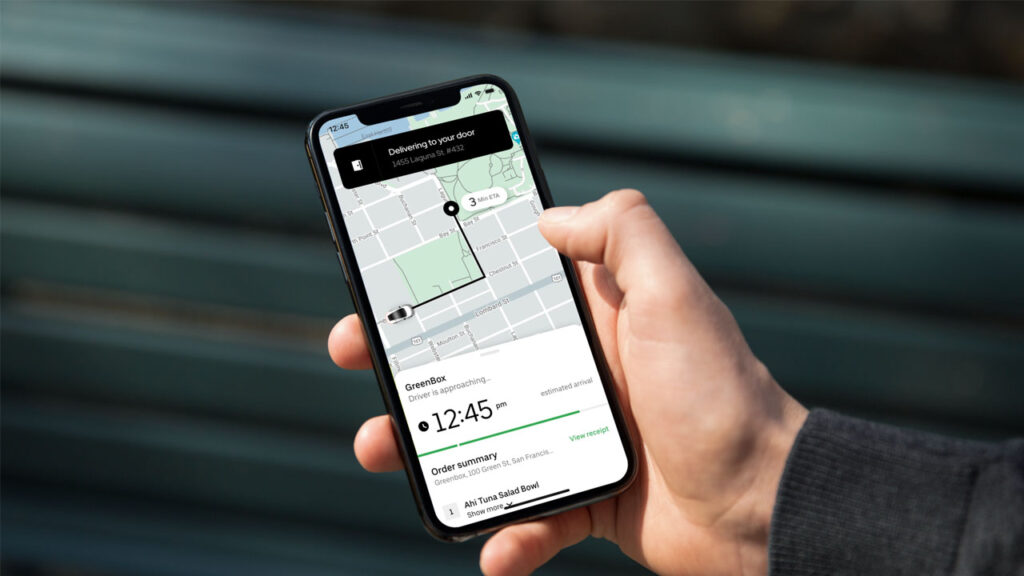
Not all Uber trips pay the same. The service tier you drive for has a direct effect on your Uber pay per hour, since each tier carries its own base fare and per-mile structure.
UberX Hourly Pay
UberX is the entry-level tier and the most common option most drivers start with. Expect Uber pay per hour in the $18–$25 range before expenses, since UberX rates are built for affordability and high trip volume rather than premium pricing.
Uber Comfort Hourly Pay
Uber Comfort requires a newer vehicle and typically pays 10–20% more per trip than UberX. Drivers who qualify often see their Uber pay per hour climb modestly compared to standard UberX shifts, without needing a luxury vehicle.
Uber XL Hourly Pay
Uber XL serves larger groups needing extra seating, and the per-mile and per-minute rates reflect the larger vehicle requirement. Hourly pay here often lands in the $22–$30 range, particularly in cities with strong group and airport demand.
Uber Black Hourly Pay
Uber Black is the premium, black-car tier and pays significantly more per trip — often $30–$50 an hour in major metros. It requires a qualifying luxury vehicle, commercial licensing in many markets, and a higher acceptance-rate standard, which limits it to a smaller pool of drivers.
Uber Pay Per Hour by City
Location is arguably the single biggest factor behind your Uber pay per hour. Dense metro areas with strong ride demand and higher costs of living tend to pay more per trip, while smaller markets pay less but often come with lower expenses and less traffic.
New York City: Among the highest-paying markets, with drivers frequently reporting $28–$35+ per hour due to high demand and city-mandated minimum pay rules.
San Francisco: Strong tech-driven demand keeps Uber pay per hour elevated, often in the $25–$32 range.
Los Angeles: A large, spread-out market where airport runs and event traffic can push hourly pay to $22–$30.
Chicago: Dense downtown demand supports solid hourly averages, typically $20–$28.
Mid-sized metros (Phoenix, Denver, Atlanta): Generally $17–$24 per hour, with lower cost of living offsetting the smaller paycheck.
Rural and suburban areas: Often the lowest Uber pay per hour, sometimes under $15, due to longer pickup distances and inconsistent demand.
If you’re deciding where to drive, matching your market to realistic expectations prevents the disappointment that comes from comparing your paycheck to national headline numbers.
Uber Pay Per Hour by Day and Time
Not every hour behind the wheel pays the same, and this is one of the most overlooked factors in Uber pay per hour discussions. Demand patterns shift dramatically across the week, and driving smart is often more profitable than driving longer.
- Weekday mornings (7–9 AM): Moderate demand from commuters; steady but rarely surge-heavy.
- Weekday afternoons (2–4 PM): Typically the slowest window, with lower Uber pay per hour due to reduced ride requests.
- Weekday evenings (5–7 PM): Commuter demand returns, often pushing hourly pay back above the daily average.
- Friday and Saturday nights (9 PM–2 AM): Consistently the highest-paying window, driven by nightlife, events, and reduced driver availability late at night.
- Sunday mornings: Often surprisingly strong due to airport runs and brunch traffic in many metros.
According to aggregated driver data, shifting even a few hours from a slow weekday afternoon to a Friday or Saturday night can boost your effective Uber pay per hour by 30% or more for the same time invested.
Gross Pay vs. Net Pay: What You Actually Keep
This is the section most competitor guides gloss over, and it’s arguably the most important one. Your advertised Uber pay per hour is a gross number — before you subtract what it costs you to earn it.
Vehicle and Gas Expenses
Gas typically runs $0.15–$0.25 per mile depending on your vehicle’s efficiency and local fuel prices. Add wear-and-tear, oil changes, tires, and eventual depreciation, and most drivers spend an additional $0.45–$0.70 per mile just keeping the car road-ready.
Self-Employment Taxes
As an independent contractor, you’re responsible for the full 15.3% self-employment tax on your net earnings — a cost a traditional W-2 employee never sees directly, since employers normally split that burden. This alone can reduce your effective take-home Uber pay per hour by several dollars once tax season arrives.
Realistic Net Hourly Rate Example
Here’s a simple real-world example. Say you gross $25 in Uber pay per hour over a 10-hour shift, covering 250 miles. At $0.60 per mile in combined gas and wear costs, that’s $150 in vehicle expenses — or $15 per hour subtracted before taxes.
Your realistic net Uber pay per hour, before setting aside money for self-employment tax, drops closer to $10–$12. This is exactly why tracking your own mileage and expenses matters more than trusting the headline number.
State Minimum Pay Laws That Affect Uber Pay Per Hour
Here’s something most guides on this topic skip entirely: several U.S. cities and states have passed laws guaranteeing rideshare drivers a minimum effective pay rate, and these rules directly shape real-world Uber pay per hour in those markets.
- New York City enforces one of the strongest driver minimum pay standards in the country, requiring a set per-mile and per-minute floor designed to guarantee an effective hourly wage after expenses.
- Seattle, Washington guarantees drivers a minimum per-minute and per-mile rate through local ordinance, one of the first cities in the nation to do so.
- Minneapolis, Minnesota passed rideshare minimum pay protections following years of driver advocacy, directly affecting local Uber pay per hour floors.
- California has debated statewide minimum earnings standards for years, though current protections vary by city and are less uniform than New York’s or Seattle’s.
If you’re driving in one of these markets, your realistic Uber pay per hour floor is meaningfully higher than the national average — which is worth factoring in if you’re comparing cities before deciding where to drive.
Uber’s “Hourly” Feature vs. Driver Pay Per Hour
There’s a second, less-discussed meaning behind “Uber pay per hour” that’s worth clearing up. Uber also offers a feature called Hourly, which lets riders book a driver by the hour instead of by single trip — with a two-hour minimum booking. This is different from asking how much a driver earns.
Under Hourly bookings, available only to qualified Uber Black or Premier drivers, the rider is charged a guaranteed hourly rate minus Uber’s service fee, plus extra per-minute and per-mile charges if the trip runs long.
For drivers who qualify, Hourly trips can offer more predictable Uber pay per hour than standard point-to-point trips, since the rate is locked in before the ride begins rather than depending on surge or distance alone.
If you searched for “Uber pay per hour” hoping to book a driver for multiple stops or a few hours of errands, this Hourly feature — not standard driver earnings — is what you’re actually looking for.
Uber vs. Lyft: Which Pays More Per Hour?
Many drivers “dual-app,” running both Uber and Lyft simultaneously to maximize hourly earnings. In most markets, Uber pay per hour and Lyft’s average hourly pay land within a few dollars of each other, since both platforms compete for the same driver pool and rider base.
That said, small differences do show up. Uber generally has a larger rider base and more consistent airport and event demand in major metros, which can translate to slightly higher Uber pay per hour during peak windows.
Lyft, meanwhile, occasionally offers more aggressive new-driver bonuses and rewards program perks. The most consistent strategy among experienced drivers isn’t picking one platform over the other — it’s running both apps at once and accepting whichever ride request pays better in the moment.
How to Increase Your Uber Pay Per Hour
If the averages above feel underwhelming, know this: the gap between typical and top-earning drivers usually comes down to strategy, not luck. Here’s how experienced drivers push their Uber pay per hour higher.
Drive during proven peak windows — Friday and Saturday nights, major events, and airport rush hours consistently pay more per hour than random daytime driving.
Track surge patterns in your specific city rather than relying on generic advice, since surge behavior varies block by block.
Prioritize longer trips over short hops when possible fewer pickups mean less unpaid downtime between fares.
Maintain a high driver rating and acceptance rate, since both affect your eligibility for premium tiers like Comfort and Black, which pay more per trip.
Track every mile and expense so you know your real net Uber pay per hour, not just the gross number Uber shows you.
Consider dual-apping with Lyft to reduce idle time between ride requests.
Minimize deadhead miles by repositioning toward high-demand zones instead of waiting in low-traffic areas.
Is Driving for Uber Worth It in 2026?
Whether Uber pay per hour makes sense for you depends heavily on your goals. As a part-time side hustle covering 10–15 hours a week, most drivers find the flexibility and supplemental income genuinely worthwhile, especially if they already own a paid-off, fuel-efficient vehicle.
As a full-time income replacement, the math gets tighter — after vehicle costs, self-employment taxes, and inconsistent demand, many full-time drivers report a realistic net hourly rate closer to $12–$16, which is worth comparing honestly against local job alternatives before committing to it as a primary income source.
The flexibility is real, and for the right person — someone who wants control over their schedule above all else — that flexibility alone can justify driving even at a modest net Uber pay per hour.
For someone purely chasing the highest dollar-per-hour return, it’s worth cross-shopping other gig platforms and even traditional part-time work before assuming rideshare driving is automatically the best option.
FAQs
Q1. What is the average Uber pay per hour in 2026?
Most drivers earn between $19 and $25 per hour gross, with net pay after expenses typically falling between $12 and $18 per hour.
Q2. Does Uber pay per hour or per trip?
Uber pays per trip, using a formula that combines base fare, distance, and time. There’s no flat hourly wage — your effective Uber pay per hour is calculated by dividing total trip earnings by hours worked.
Q3. What city has the highest Uber pay per hour?
New York City consistently ranks among the highest, partly due to strong demand and partly due to city-mandated minimum pay standards for rideshare drivers.
Q4. Is Uber pay per hour better than Lyft?
The two platforms are typically within a few dollars of each other in most markets. Many drivers run both apps simultaneously to maximize their combined hourly earnings.
Q5. How much do Uber drivers make after expenses?
After gas, maintenance, and self-employment taxes, realistic net Uber pay per hour typically lands between $12 and $18, depending on vehicle efficiency and local costs.
Q6. Do Uber drivers get a guaranteed hourly rate?
Only in select markets with local minimum pay laws, such as New York City and Seattle. Outside of those regulations, and outside of Uber’s separate Hourly booking feature, pay is trip-based rather than guaranteed.
Q7. What is Uber’s Hourly feature?
Hourly is a booking option that lets riders reserve a qualified Uber Black or Premier driver for a set block of time, with a two-hour minimum, rather than booking single point-to-point trips.
Q8. What time of day pays the most on Uber?
Friday and Saturday nights between roughly 9 PM and 2 AM are consistently the highest-paying windows due to nightlife demand and reduced driver availability.
Q9. How can I increase my Uber pay per hour?
Drive during proven peak windows, track local surge patterns, prioritize longer trips, maintain a strong driver rating, and track your real expenses so you understand your true net hourly rate.
Q10. Is driving for Uber worth it financially in 2026?
For part-time supplemental income with a fuel-efficient vehicle, most drivers find it worthwhile. As full-time primary income, the realistic net hourly rate is often lower than expected once expenses and taxes are factored in.
Disclaimer: All net worth and income figures cited in this article are estimates based on publicly available information, industry benchmarks, and third-party analytics. No official financial statements for Haiden Deegan are publicly available. Richlix.com does not claim these figures as confirmed fact.
Read More About ;
- Rachel Griffin Accurso Net Worth 2026: The Truth Revealed
- Scotty Kilmer Net Worth 2026: How He Built His Car Fortune
- Gena Tew Net Worth 2026: Her Real Earnings & Untold Story
- Kris Krohn Net Worth 2026: How He Built His Real Estate Fortune
- Greg Locke Net Worth 2026: The Truth Behind His Fortune
- Elsa Jean Net Worth 2026: The Surprising Secrets Behind Her Fortune
- Jim Cramer Net Worth 2026: How He Really Built His Fortune
- Alex Hormozi Net Worth 2026: How He Really Built His Fortune
- Taylor Swift Net Worth 2026: Her $2 Billion Fortune Revealed
- Taylor Swift Wedding: Full Timeline, Guest List & Everything Confirmed
- Bobby Bonilla Net Worth 2026: Why the Mets Still Pay Him
- Chris Evert Net Worth 2026: Her Fortune After 18 Grand Slams
- David Natroshvili Net Worth 2026: The SPRIBE Billionaire Explained
- David Natroshvili Net Worth 2026: Income, Businesses, Wife, House & Fortune



-
-
-
-
-
Show CommentsAdult themes is widely available on dedicated platforms for mature
audiences. Opt for trusted adult hubs to ensure safety.
Wonderful goods from you, man. I’ve understand your stuff previous to and you’re just too
wonderful. I actually like what you have acquired here,
really like what you are stating and the way
in which you say it. You make it enjoyable and you still care for to
keep it sensible. I can’t wait to read far more from you.
This is actually a great web site.
I am not sure where you are getting your information, but good topic.
I needs to spend some time learning much more or
understanding more. Thanks for great information I was looking for this info for my mission.
Terrific article! That is the kind of information that should
be shared across the web. Shame on Google for not positioning this put up upper!
Come on over and seek advice from my web site .
Thanks =)
Круто случайно наткнулся на такое количество качественных полных порнофильмов!
Раньше никак не мог найти, а тут просто праздник.
Картинка очень четкая, актрисы супер красивые, невозможно остановиться.
Настоятельно рекомендую этот сайт.
Частые обновления. Любые категории полных порнофильмов присутствуют.
Теперь только здесь смотрю полные порнофильмы!
Stop by my web blog: Порнофильмы